The Crucifix in the Stone
Description
Kaiserburg Castle Chapel, Nuremberg — Fine Art Heritage Print, Germany
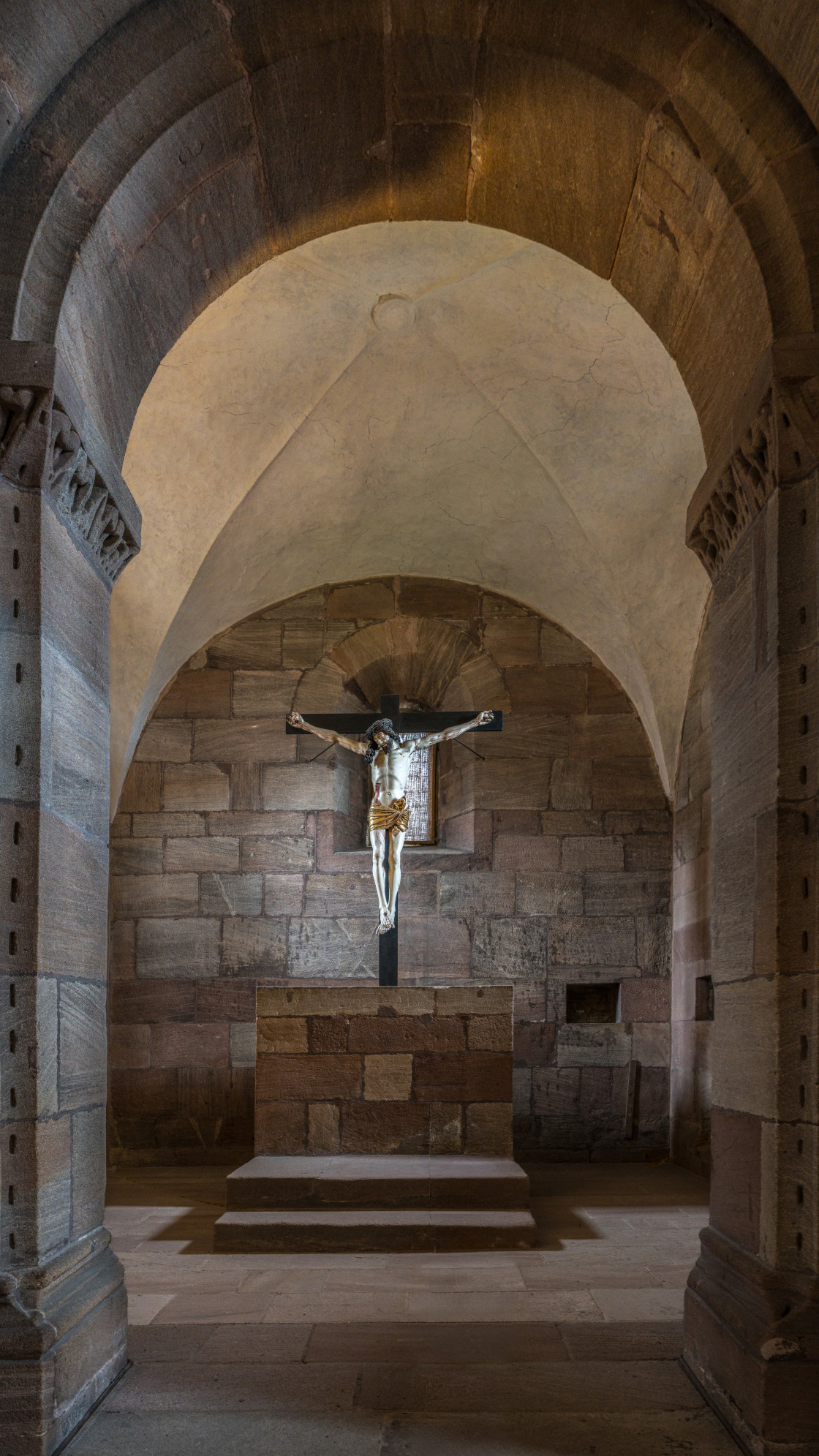
The interior of the Kaiserburg Castle Chapel in Nuremberg — a Romanesque sandstone space dating to the eleventh century, photographed through the nested arch structure that draws the eye from the outer colonnade through the vaulted inner arch to the crucifix on the altar. Available light on stone that has stood for nearly a thousand years.
The crucifix in the photograph is attributed to Veit Stoß (circa 1450–1533) — one of the most celebrated sculptors of the late Gothic period, described by the Florentine historian Giorgio Vasari as having produced "un miracolo di legno" — a miracle in wood. The carving dates to around 1500 and stands in the Imperial Chapel of the Kaiserburg, a Romanesque double chapel built around 1200 where Holy Roman Emperors came to worship privately. The original high altar did not survive the centuries — the Stoß crucifix was placed where it stood. The chapel itself is one of only two structures in the entire Kaiserburg complex to survive the Allied air raids of 1944–45 intact. Everything around it was destroyed. The chapel — and the crucifix — remained.
For walls that hold history.
This image belongs in a space where depth and permanence matter — a study, a library, a room where the person working there values things that were built to last. The warm sandstone palette — cream vault, reddish-brown walls, deep umber floor — integrates with timber, leather, and linen interiors and changes character depending on the light in the room. In morning light it glows. In evening light it deepens. The nested arches reward every closer look; the crucifix at the centre is the point where all the architecture's intention finally rests.
For heritage and travel buyers, this is the Kaiserburg's interior as most visitors never quite see it — the angle that reveals the full architectural intention of the space in a single frame.
Technical Details:
Subject & location: Kaiserburg Castle Chapel, Nuremberg, Germany. Built 11th–12th century.
Format: Vertical portrait (3:4 ratio)
Available as: Digital download / Fine art print
Recommended print sizes: 60×80cm · 75×100cm · 90×120cm
Licensing: Personal, editorial, heritage, travel, and religious/cultural licensing available
Formats
Digital Download
Printed Product
Buy
From $69.84